
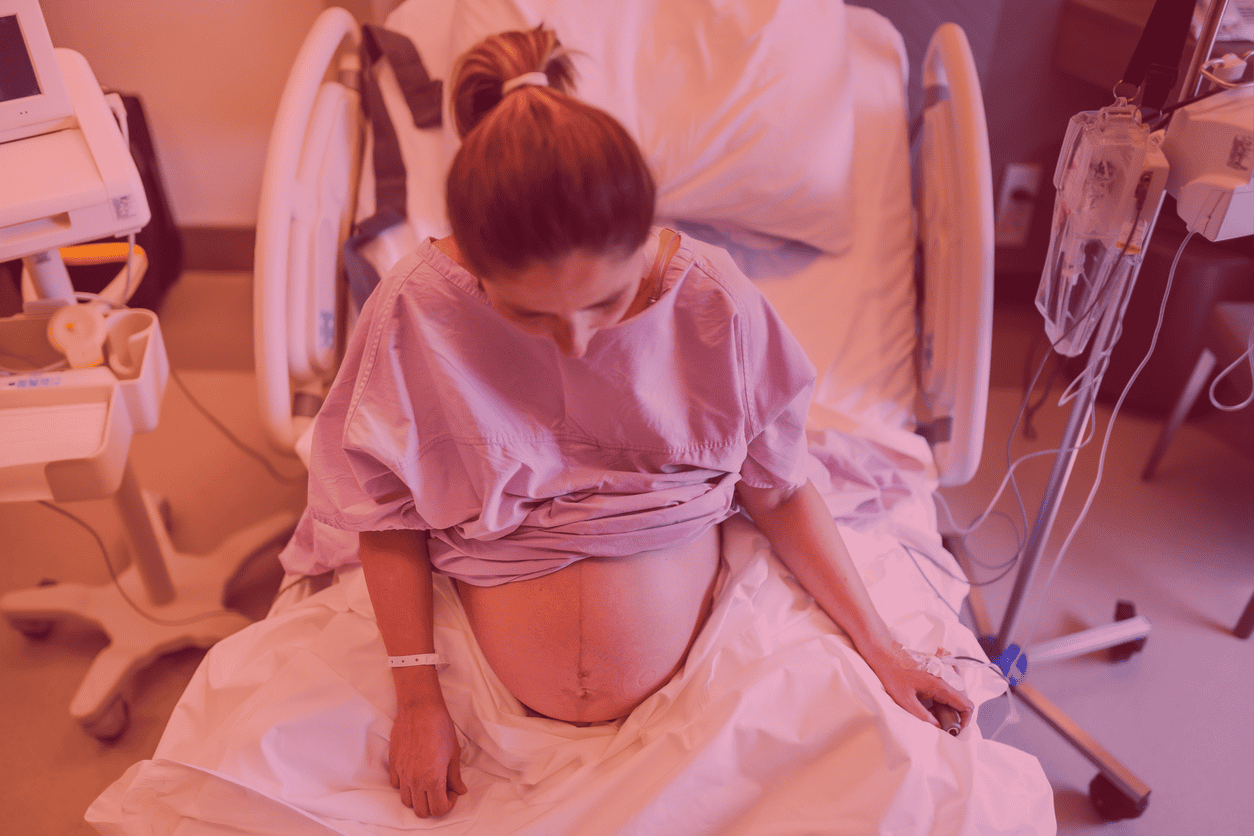
Trigger warning: please note that Tiffany’s story below includes mentions of coercion and birth trauma.
Tiffany
For years, Tiffany has been suffering the long-term effects from extreme vaginal tearing during her first birth. Here, in her own words, she explains some of the coercion she faced during the birth and immediate aftermath…
“I had my first child at 20, my second at 23. My firstborn’s delivery was quick. I was in shock. I was young, scared, I had no idea what to do. My daughter was born within 15 minutes of pushing. I remember the midwife telling my mum to push the red button. A number of people rushed in, my legs up in stirrups, this pain was worse than before. I was bleeding uncontrollably. Lying there in agony was beyond frightening. I felt like I was being tortured. Nothing could have prepared me for this feeling. The consultant was happy she had stitched me without taking me into theatre – but the reality was, I had been stitched for a second-degree tear but in fact had a missed fourth-degree tear. I didn’t know this until a decade later. At my six-week check a doctor examined me. I was in severe pain.
A referral was made to gynaecology. Three months postpartum I went in for a Fenton’s procedure. This was the worst day of my life. I was awake throughout. Tears were rolling down my face. The surgeon had no compassion, instead telling me to stop being a silly girl and laughing at me. The nurse was holding my hand tightly, but in reality no-one spoke up for me, they were just bystanders. The treatment I received was not safe. The consultant’s repair was so bad it had now caused me to re-tear at home, further than before. I suffered life-changing injuries as a result.”
“This could have been avoided with proper treatment.”
“Due to re-tearing, I had to return to see the consultant who said: “For god’s sake I haven’t got time for this.” I was stuffed with gauze. The consultant returned with something to hand and without warning, she used silver nitrate caustic sticks to “stop” the bleeding from the tear. I screamed and had to beg: “Please stop, this really hurts.” The response was: “Don’t be so silly, don’t be a baby.” She continued to make abhorrent remarks before she said she was done with me and told me to leave. I relive this experience relentlessly and it’s deafening. I felt that I was assaulted by someone in a position of power. Living in a body that no longer feels like mine is extremely dehumanising.
Just over three years later, and I was due with my second child. The pregnancy was complex throughout. He was born via planned but emergency caesarean due to going into labour three weeks early. I have scoliosis, and this wasn’t considered when placing my epidural. Many attempts were made – a spinal block with an epidural running through it was the outcome. At this point the focus was on delivering my chunky baby. After being left in labour for eight hours, his shoulders were stuck in my pelvis, so a lot of effort was made to deliver him.
Eight minutes after birth it was clear he was poorly. This has continued throughout the majority of his life. I share this because it’s a reason why I was so detached from realising my own suffering. I was dealing with advocating for him and spending a lot of time in hospitals. It was later discovered I actually had bruising to my spinal cord and nerves during the placement of the epidural. My mobility was impacted and my entire large bowel is damaged, leaving me in agony.”
“I have suffered as a consequence for nearly 12 years. I have been diagnosed with PTSD. I get severe anxiety and flashbacks that can happen anytime, anywhere, but particularly at medical appointments.”
“A massive impact of my birth trauma has been difficulty bonding with the baby, which has continued to this day. I have an intense need to be in control of my body and independently able to cope with situations; this stems from feeling unsafe and helpless during the aftermath of childbirth. I have been clinically depressed as a result, and I have lost more than I care to say.”
Read our report ‘End Coercion in Maternity Care in the UK’“I just want to urge anyone in any circumstance, medical or otherwise, to always know you have a voice and you matter. Say what you’re thinking no matter what because it could stop unnecessary suffering in its tracks.”
You can access our FREE human rights information factsheets here, and find further resources around coercion via the button above.