
2025 has been a year of change, growth and challenge for Birthrights.
But our mission remains clear.
Our maternity system is still in crisis, and it is more urgent than ever to do the work that will enable all women and birthing people to make informed, autonomous decisions about their care, free from coercion, discrimination or punishment.
In 2025, our online information and resources supported 166,055 people in their journey to birth justice.
We offered personalised advice to 479 individuals through our advice service, with more enquiries coming from those in the 3rd trimester than any other time.
Campaigns and Policy
Accessed Denied: Restrictions to Home Birth in the UK
The first quarter of the year saw the launch of our Home Birth Campaign, which was the culmination of a Freedom of Information investigation into the UK’s home birth provision between October 2023 and November 2024. We found evidence of widespread restrictions, suspensions or frequent interruptions in two-thirds (66%) of Trusts we investigated.

A national failure to provide widely available and accessible home birth services demonstrates a disregard for our right to make decisions about our bodies and our care. A maternity system that protects the rights of women and birthing people during pregnancy and birth is essential to reducing trauma, providing safe care, improving outcomes for all and addressing racial disparities.
We launched our report with a webinar and developed resources for women and birthing people who are impacted by home birth restrictions, including an email template for them to challenge any restrictions in place.
Our work on challenging home birth restrictions will continue in 2026 – as we call for all Trusts to have a functioning, safe homebirth service, which is widely available and accessible as a core part of maternity provision alongside midwifery- and obstetric-led units. Urgent action must be taken nationally to stop and reverse the dismantling of community health infrastructure.

You can read more stats from our campaign, and see the full media coverage here
Hearing from midwives
July saw the results of our midwife survey, where we asked trained, practicing and student midwives about how they felt about the system, their future prospects, training and the current biggest challenges facing the profession.
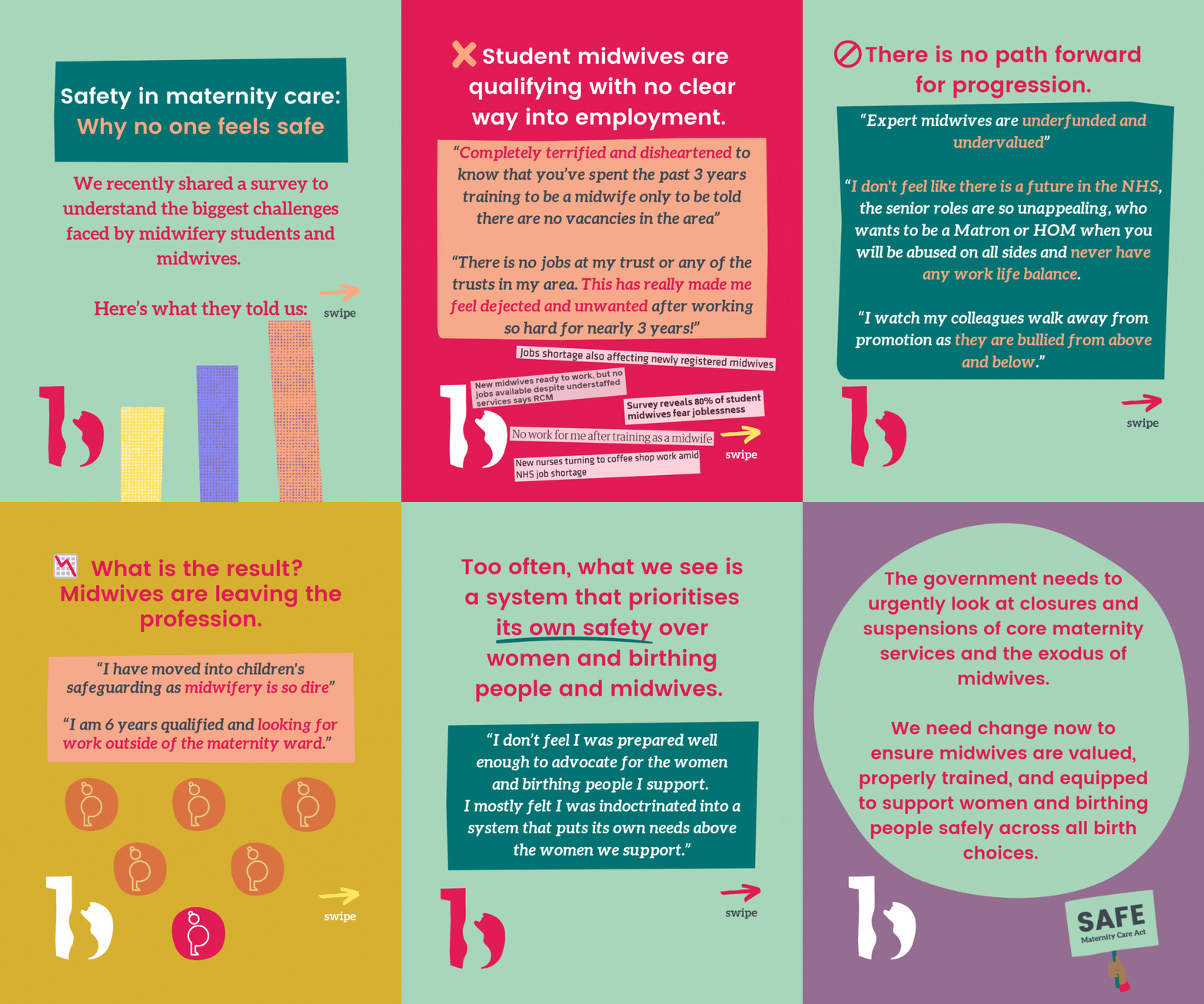
The answers from our survey’s 101 respondents highlighted a broken maternity system where:
🔸 Student midwives qualify with no clear way into jobs
🔸 Midwives face burnout, bullying, and other barriers impacting their path to progression
🔸 Training is lacking, especially on complex situations, bereavement care, or physiological birth. Many qualify without ever attending a home birth.
🔸 Because of this, midwives are leaving the profession and feel unsupported.
We heard too many stories of staff feeling deskilled, disempowered, and demoralised by a system that doesn’t allow them to practise the kind of person-centred care they believe in. We stand in support of health care professionals who are striving to provide better care and to put human rights at the core of all they do.
One year on from the riots
During last summer’s racist and Islamophobic riots, access to maternity care was disrupted with those most at risk of being the target of violence – Black, Brown and minoritised women and birthing people – left unsupported when it came to ensuring their continued and safe access to care. What happened last year highlighted systemic neglect and a lack of preparedness that continues to put lives at risk.
One year on, we are still waiting for answers.
That is why we’re calling for systemic change, not silence. We created easy-to-use letter templates to encourage people to write to the relevant authorities and demand answers and concrete actions from the government.
Communications/Media
Racial injustice and systemic racism
Racial justice has long been at the heart of Birthrights’ work (for more, please read our report: Systemic Racism Not Broken Bodies). Systemic racism is embedded within our maternity care systems and continues to be at the root of breaches of consent, coercive practices, failures to recognise medical conditions due to skin colour and care which dismisses the voices of Black women and birthing people.
So we were delighted to collaborate with Coronation Street on a storyline they aired this spring, focused on racial injustice, systemic racism and maternity affecting character Dee Dee Bailey (Channique Sterling Brown).
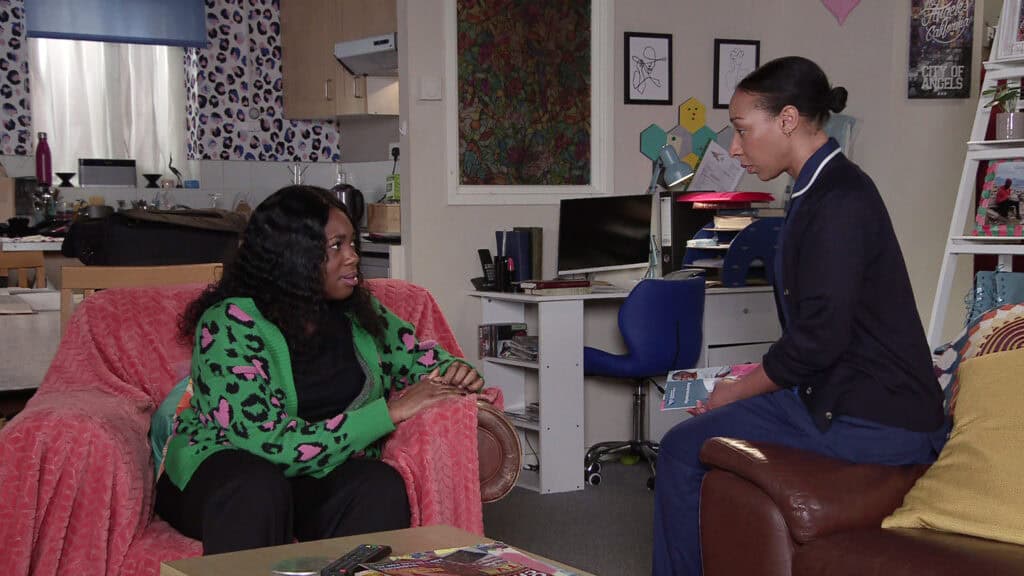
This powerful storyline showcased the sad reality that there are still persistent disparities affecting Black and Brown woman and birthing people and their maternity care.
In May, we focused attention on reimagining safety in maternity care with the publication of a blog by our Campaigns and Policy Manager Elif Ege which interrogated the negative impact of seeing safety only through a defensive lens. Birthrights also gave evidence in Parliament to the Health and Social Care Committee alongside Sonah Paton and Marian Knight MBE, emphasising the need for new legislation to protect the fundamental rights of woman and birthing people across the UK.
We also continued our work translating our factsheets, adding Polish, German, Turkish, Ukrainian, and Italian versions of ‘Your Basic Birthrights’ this year.
The Soon Life
Birthrights also got the chance to collaborate with award-winning playwright Phoebe McIntosh with her thought-provoking, funny and deeply moving play, The Soon Life, which shines a light on the realities and pressures of navigating relationships, childbirth and choice. Our legal lead and our policy and campaigns manager both took part in post-show panel discussions, exploring themes including restrictions to home birth and the importance of rights-respecting, personalised support during pregnancy and birth.
Staffing/Organisation
In the summer we sadly bid goodbye to our wonderful co-CEOs Shanthi Gunesekera and Janaki Mahadevan. During their tenure they strengthened our organisational foundations, achieved real impact for women and birthing people and established an exciting pipeline of critical activity in support of our mission.
We were very happy to welcome our new CEO Hazel Williams in November. Hazel brings with her a wealth of experience, most recently serving as the Director of Justice Together, leading a national programme to improve anti-racist practice in the migration sector and access to justice for people in the immigration system. She is also a trained birth doula, and lives by the sea with her three children. Special mention to the hugely experienced Tracey Fletcher, who expertly held Birthrights in the short-term as interim CEO.
Human Rights Law
Holding others to account
During the year, we also wrote to multiple trusts, and launched one legal action, challenging human rights violations relating to homebirth restrictions, birth centre closures, and NHS charging rules.
We worked collaboratively with several trusts and other health bodies to ensure that guidelines they had in development truly centred women and birthing people’s human rights at all times.
Birthrights also wrote to two regulatory bodies acting in the maternity sphere, flagging that they have made recommendations or published materials that do not take sufficient account of women and birthing people’s human rights. You can read more here and here.
Maternity investigations
Earlier in the year, we participated in a national collective working group of 98 national and grassroots organisations and individuals to respond to the Government’s national investigation into maternity care, advocating for maternity care to be human rights-respecting and to centre the needs of Black and Brown women and birthing people and those from marginalised communities. This is ever more vital, as the statistics remain stark.
The latest MBRRACE Report once again showed no improvement in maternal death rates or in the stark inequalities that persist in the maternity sector. According to the report, women from Black ethnic backgrounds were still more than twice as likely to die compared to White women.
And Baroness Amos’ initial reflections from the National Maternity and Neonatal Inquiry, released in early December, revealed accounts of dirty wards, hungry mothers and systemic racism and discrimination leading to disproportionately poor outcomes for Black and Brown women and birthing people, as well as for those who are young, working class or facing mental health challenges. These findings are not a surprise to Birthrights, only serving to emphasise the need for the human rights framework to form the core of all recommendations moving forward.
2026
Coercive Practices Campaign
And as we look ahead to 2026, our focus has turned to our immensely important campaign to ‘End Coercive Practices’ in maternity care.
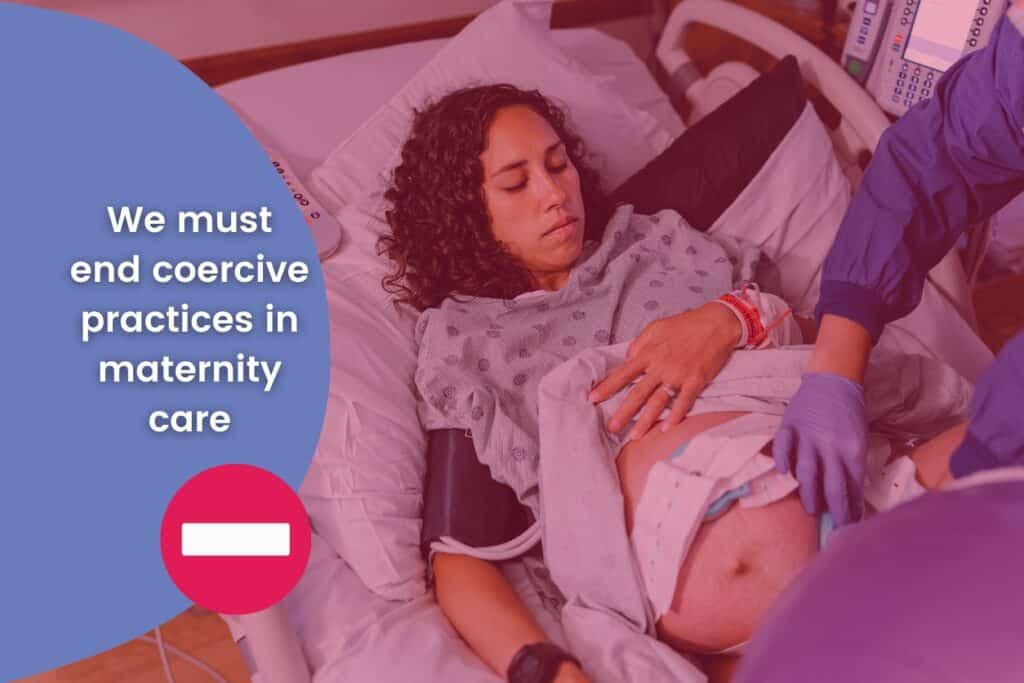
We have spent this autumn and winter hearing from women and birthing people as well as healthcare professionals who have revealed an alarming picture of widespread coercion, including pressure, misinformation, social services threats, and even physical force.
The traumatic and shocking stories we have heard must become catalysts for change. We will be releasing a full report, webinar and media campaign in 2026, stay tuned for more!
Thank you!
And of course, finally we want to thank all our supporters without whom we wouldn’t be able to continue in our fight to ensure all women and birthing people have their human rights respected in maternity.
We always welcome any support whether that is through donations, signing up to our newsletter, spreading the word about our work, or sharing our requests for information to help us campaign for change.
Thank you, and see you all in 2026!