Tara’s story: An RAF lawyer fighting to make military maternity services fairer
“There is no centrally published policy on what a service person, a MOD civil servant, or their family members, while stationed overseas, are entitled to in terms of elective caesareans.”
Tara has been a lawyer for the Royal Air Force since 2015. Currently, she is stationed within UK Space Command, but when her youngest daughter, Rose, was born, she was based out of the US – at the US Naval War College in Rhode Island.
Here Tara shares her story, how she came into contact with Birthrights and why she is fighting to change military policy around elective caesareans…
A lack of clarity
For military personnel stationed in the UK, our maternity services would be provided under the NHS. When we are stationed overseas, pregnancy and delivery would depend on the circumstances. Some locations are classed as “non-confinement” and deemed unsuitable for supporting pregnancy, and a return to the UK would be mandated. Other locations may be able to support pregnancy and delivery ordinarily, but if the pregnancy is high risk or there are medical issues and no NICU, for example, then on medical supportability grounds, a return to the UK would be appropriate.
There is no centrally published policy on what a service person, a MOD civil servant, or their family members, while stationed overseas, are entitled to in terms of elective caesareans. Labour and delivery could be provided SAAFA (the Soldiers’, Sailors’ and Airman’s Families Association), or by Healix International as the MOD’s supplier of global healthcare. This may involve contractual relationships with local hospitals. Another possibility is that the host nation may provide the medical provision under a status of forces agreement.
Medical services in the US are privatised. However, there is a reciprocal agreement between the US and the UK in terms of healthcare, meaning that serving personnel and their families may be able to access services through the military treatment facility (MTF) on base and otherwise, “outpatient” medical care is funded by a US insurance policy, currently TRICARE. Labour and delivery are “inpatient” care, and this is funded by the UK military, which sets the terms of coverage.
The MOD has an overarching medical policy, which confirms that medical care should, “so far as is reasonably practical”, mirror UK entitlement. The Armed Forces Covenant also says that military personnel and their families should not be disadvantaged by virtue of serving overseas. Despite this, the current policy with regards to elective caesarean sections while in the US, requires that they be “medically necessary.”
Tara’s pregnancy history
We have three children. Our eldest was born in Germany at term, and it was a fast labour and delivery. I’d had an unmedicated episiotomy. It used to be something we joked about when the topic of births ever came up – they pulled out some ‘tools’, shook their head at my husband to say don’t let on, and he describes it “as a scream I’ll never forget.” Joking aside, I was nervous when I became pregnant with our son, and I sat down with my midwife and enquired about having a caesarean on elective grounds. I worried a second birth would be even quicker than the first, and needing to get into London, I was worried there may not be time for time relief – something I was set on after the episiotomy. They came up with a plan of an early medicated induction, and it was a very calm and positive experience.
When pregnant with our third, I had a call early on with the military department responsible for healthcare provision while stationed in the US, as navigating pregnancy entitlements was not entirely straightforward – even if TRICARE consented to medical treatment, any services had to be something we would also be eligible for on the NHS. Mistakes could be costly. During this conversation, they confirmed that elective caesarean sections were not permitted unless for medical reasons, but that I would be covered if needing an emergency caesarean. I had not intended to have an elective caesarean at this point anyway.
A complicated third pregnancy
However, the pregnancy became more complicated than my other two. This time, I was diagnosed with gestational diabetes and required insulin and close monitoring. Towards the latter stages, my blood sugars were very unstable, and it was determined that I would be induced at 37 weeks. Six days prior to my induction, I had my final obstetrician (OB) appointment. During this appointment, I was advised that the review of my final ultrasound three days prior indicated there was a high risk of a shoulder dystocia occurring during birth. I had not heard of this before, but I had no reason to immediately worry as my OB said I didn’t need a caesarean section when I asked. I had brought up the previous episiotomy and was told we could have pain relief in place and that there were things they could do, and she said she’d be there for the birth. At no point were risks to my baby mentioned.
I was still working full-time at this point – in fact, I didn’t have a chance to pack my hospital bag until the morning of my induction. However, when I googled it later that night and read of risks to the baby (and Mum) during a shoulder dystocia, I first started to feel in my gut that a vaginal birth was not sensible. I sent a message to my OB to say I hadn’t been aware that a shoulder dystocia put the baby at risk, as she had only discussed pain relief with me, and suggested that maybe we ought to consider a caesarean section. I reminded her of the military terms and that they would require a letter to say that it was “medically necessary” to obtain approval.
As time progressed and I researched more, I became increasingly nervous about the risks to my baby. Had I had a choice, then I would have opted for a caesarean section.
I appreciate that this procedure has a longer recovery time and associated risks: something I was aware of following conversations in my second pregnancy. But, while I’m not medically qualified, my mother’s instinct was that this would have been the right decision – and one I’d have exercised had I had the choice.
Unfortunately, the OB said it was not “medically necessary”, and this meant that I would not qualify under the MOD terms. Many months after giving birth to my daughter, I found out that the hospital had certain targets, and I also came across a comment from my OB to a local news establishment on it having the lowest rate of caesarean sections in the States.
Finding Birthrights
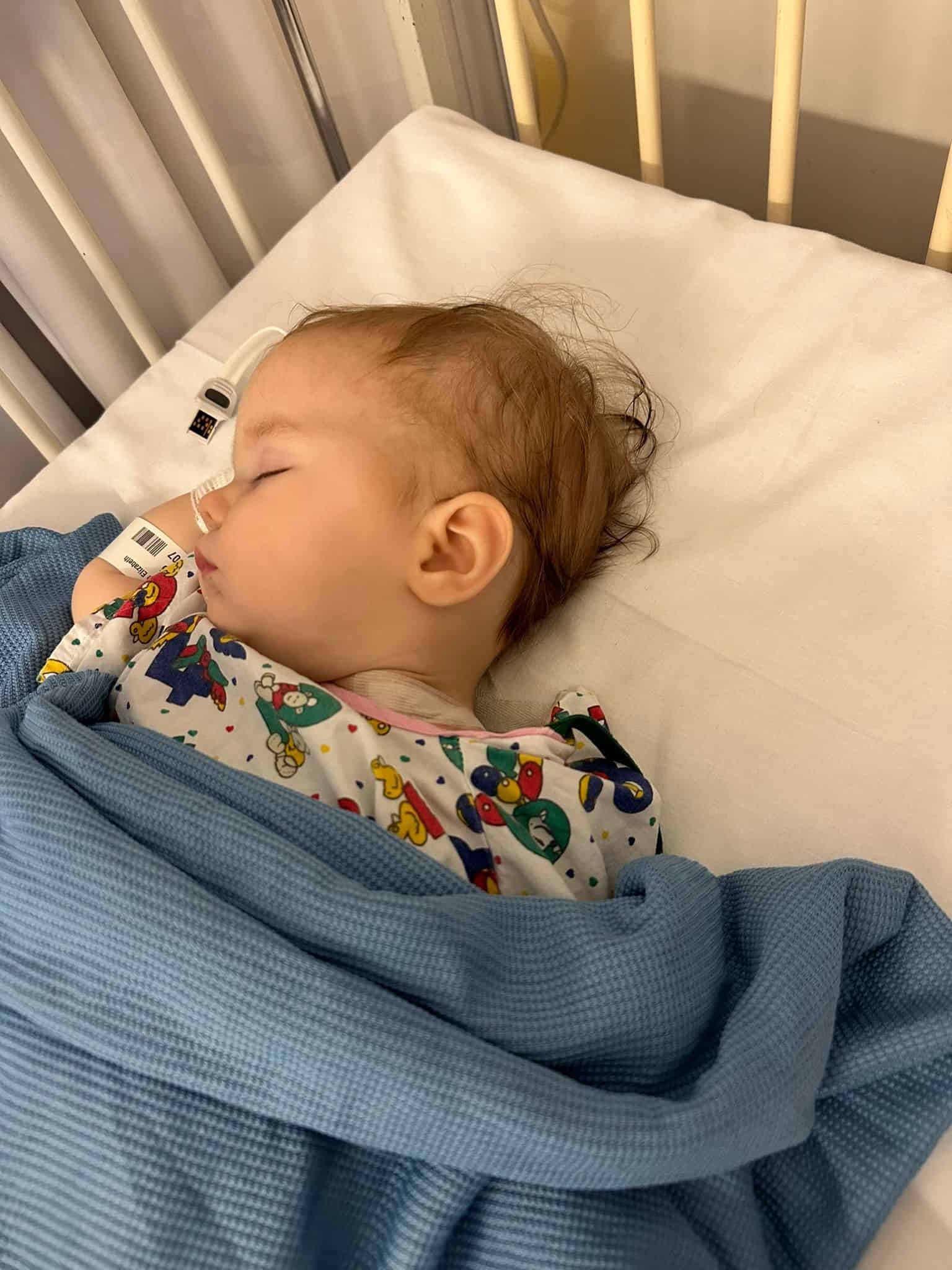
When Rose was born, she was unable to move one of her arms much, and it was in a “tea-cup position.” We were told she had “Erb’s palsy.” This is the most common complication of a shoulder dystocia. She has undergone occupational and physical therapy since birth and has had two operations and other medical interventions and tests. I was in survival mode for a long time, but I felt that I should have been able to exercise autonomy over my body and birth choices. This led me to contacting Birthrights for advice and guidance. I had a huge amount of support from Johanna, who has now left Birthrights and is focussed on supporting neurodivergent women in birthing matters. As our conversations progressed, it became clear to me that in the UK, not only do women have the choice to elect for caesarean sections, but they should be advised of this at an early stage of pregnancy. Birthing choices are tied to human rights (specifically Article 8 of the European Convention on Human Rights), and I strongly feel we must protect these rights. I was stationed in the US at a time when there was an erosion of women’s rights, for instance, Roe v. Wade removed the right of women to have an abortion in certain States.
As I chatted to Birthrights, it became clear to me that removing a woman’s choice over how she wants to give birth has significant ramifications. The policy position was driven by financial reasons, as a caesarean section costs more than a vaginal birth. My example is an extreme one, but this should have been my choice. The military has a Defence Council Advisor (DCA) OB, and it is subject to the public sector equality duty, but the policy implemented was not reviewed by the DCA OB, nor was an equality impact assessment carried out. I believe that such a policy erodes women’s rights and makes it harder to exercise informed consent. In the UK, where a woman is at risk of a shoulder dystocia, they should be given the option of a caesarean section and advised of the risks of this surgery to enable them to make an informed decision. However, there is always an option for an elective caesarean in any event. A woman may have several reasons for their preferences over birthing choices, but they should be theirs to make. In the US, the risk of shoulder dystocia does not automatically translate to a caesarean section being medically necessary and, in my case, it did not qualify as such. Hospitals in the US have the facilities to support caesarean sections, and while there is a cost uplift to the MOD, women serving or accompanying their families overseas should retain the same rights as they would in the UK.
A change in policy?
The medical department within the MOD has been supportive and aligned throughout this process. While some individuals have pointed blame my way, a Group Captain within the RAF was the first person to express empathy and say, “I’m sorry this happened.”
The US policy is owned by a different department, as the costs fall to the US support group unit within the UK MOD rather than the medical branch. As a result, as well as my complaint, I’ve also raised this matter to the most senior level possible and submitted a whistleblowing claim. The service complaints ombudsman for the armed forces also investigated. They did not uphold my complaint. I requested permission to refer to a one-line extract of their findings – which I felt was unsatisfactory and contradictory. They denied this request and said I could only refer to their decision in general terms.
Medical necessity is a condition of coverage imposed by the US support group unit and, per the American College of Obstetricians and Gynecologists (ACOG), my circumstances did not meet the criteria of medical necessity. Yet, throughout this process the onus has been placed on me to challenge my Dr on her medical advice while the NHS allows for maternal right caesarean sections without imposing medical necessity as a requirement and best practice emphasises that this “right” should be clearly communicated at an early stage of pregnancy.
The policy has changed somewhat. While it still requires an elective caesarean to be “medically necessary” if it is to be approved, pregnant women are also advised to contact the healthcare team if they wish to explore the possibility of having a caesarean section. Women are also advised that they may return to the UK to give birth, if they prefer.
Limitations of the policy
Even now that a right to return to the UK has been made clear, I don’t believe this is enough. In my case, I found out about the risk during my labour six days prior to giving birth, and while I’d recently returned from non-local duties within the weeks prior, I was past the point of flying being safe. But even if a woman decided she wanted a caesarean at an earlier stage, it won’t always be straightforward. Unless there are family or friends in the UK where a woman could stay until the new baby has a passport for travel, the whole family would need to return. If the pregnant woman is in an early stage of their current assignment, or that of a partner or parent, then they may have concerns about returning to the UK. They may also have other children settled in school, and a premature house move could add further strain. As such, offering the option to “return to the UK” might still fetter true informed consent. Informed consent needs to first let women know what their rights are at an early stage of their pregnancy and, second, protect and honour those when overseas. I hope this blog exerts pressure on the MOD to review this policy.