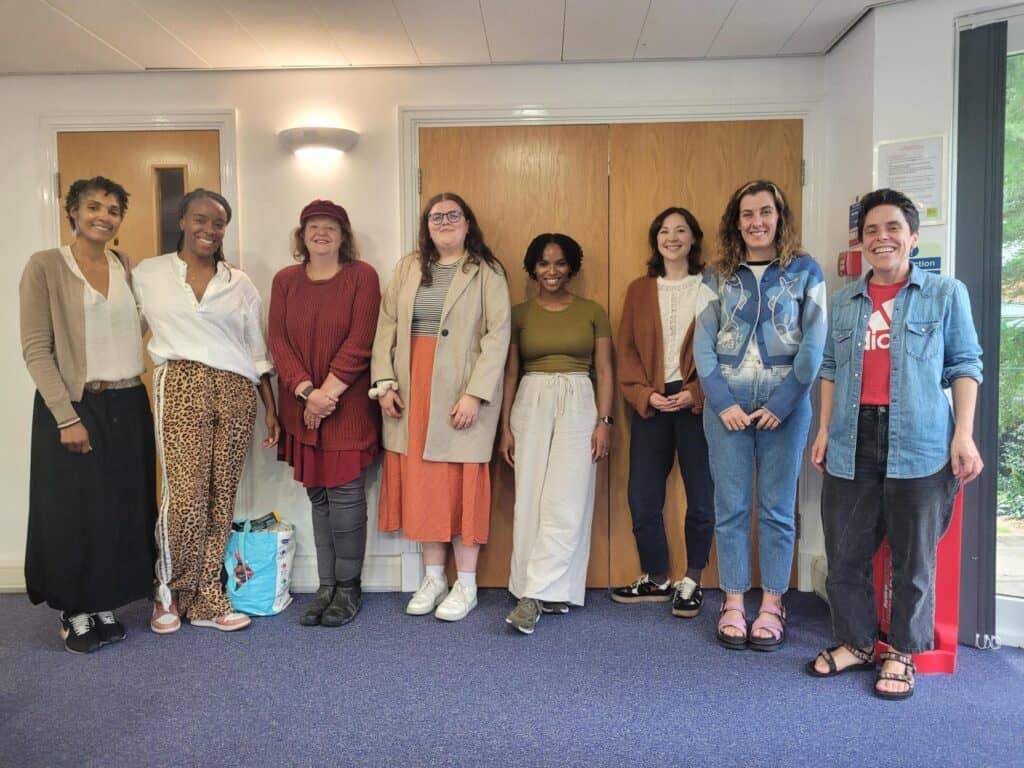
Birthrights’ Policy and Campaigns Manager, Ann-Marie Agyeman, shares her reflections from Birthrights’ September away day.
“We started September by bringing the Birthrights team together in York for a staff away day focused on our value of anti-racism. Our value states that:
We recognise that systemic racism exists within the maternity system. We critically examine our own thinking and practice through reflection and learning. We will embed anti-racist approaches throughout our work and expose racism within the system we are part of.
In 2022, Birthrights published Systemic Racism, Not Broken Bodies, an inquiry into racial injustice in maternity care. The inquiry strengthened our commitment to challenging racism and embedding anti-racist thinking and practice across our organisation and sector.
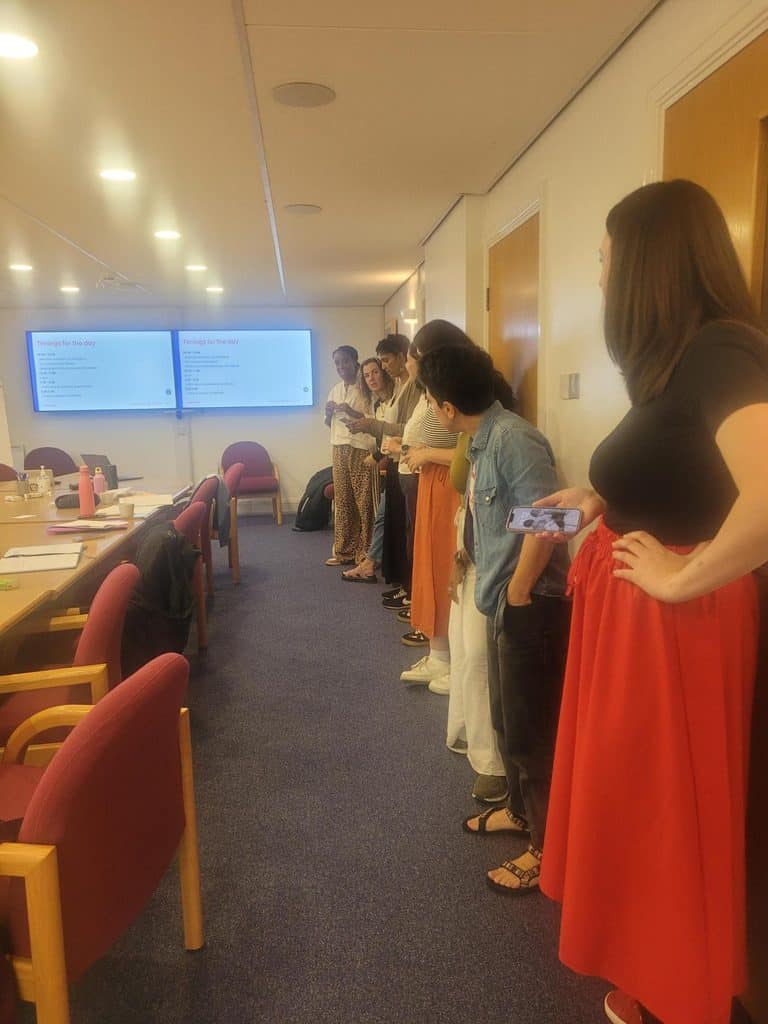
We began the day with an exercise designed to help us reconnect with one another and, quite literally, shake the rain off after arriving in York. For a fully remote team, creating space to connect, settle into the room and be together matters.
Our CEO, Hazel, then led a session exploring Birthrights’ journey with anti-racism so far. We reflected on the work that has shaped our organisational commitment and the ways our thinking and practice have developed. We used the following definitions of racism and anti-racism to anchor our discussions:
Racism can be understood as the hierarchies of knowledge, value, power and respect that play out in our behaviours, systems, processes and structures. These hierarchies are based on socially constructed categories of race. Anti-racism is the active work of disrupting and dismantling these hierarchies.
As Campaigns and Policy Manager, I then led a session exploring how individual power, perspective and decision-making shape our work. We considered the choices we make in our day-to-day roles and how those choices can influence whose voices, experiences and expertise are reflected in the work we produce.
Anti-racism requires us to continually ask ourselves difficult questions about how we work, whose knowledge we value, who gets heard and whose experiences are absent.
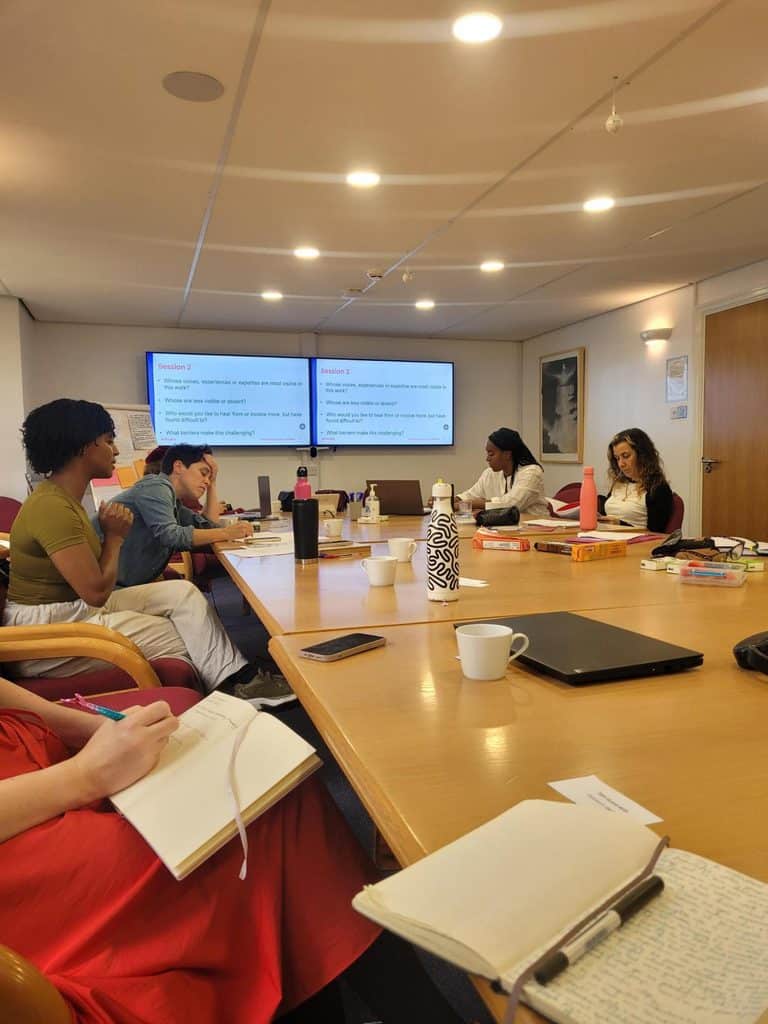
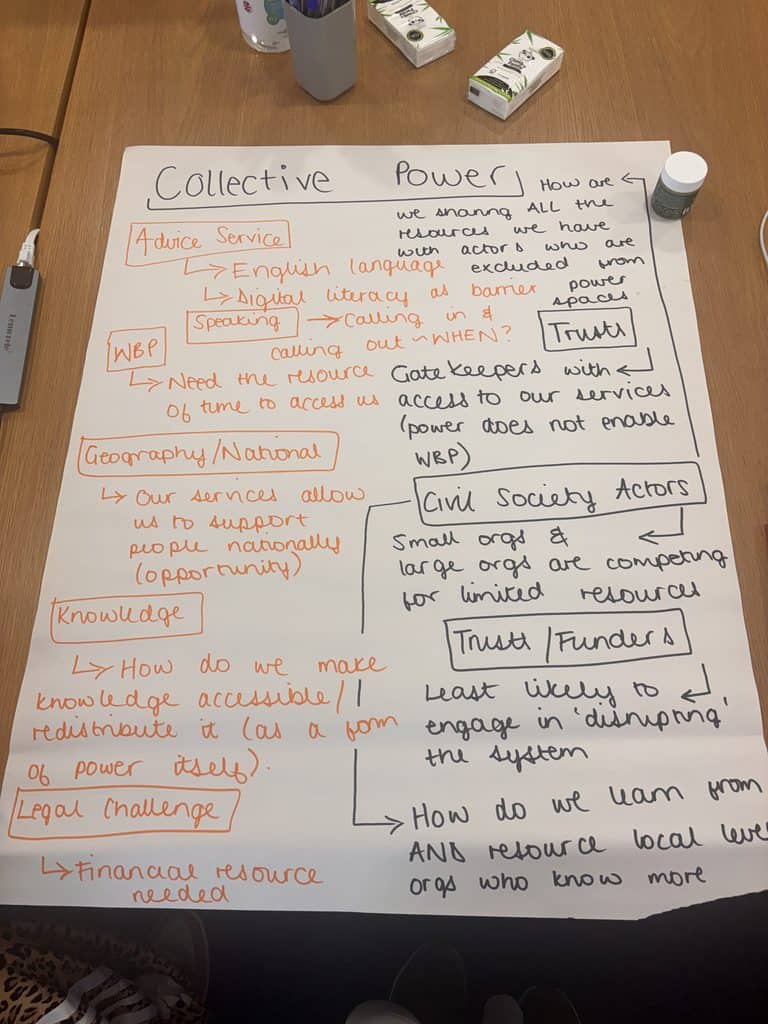
After lunch, we shifted our focus from individual power to collective power. We thought about the power imbalances that exist within the spaces we work in, how these influence our anti-racist practice, and where we might have opportunities to challenge and most importantly, redistribute power.
We ended the day with a creative hour, facilitated by Geraldine our Operations Manager, giving us an opportunity to step away from discussion and use our bodies and creativity to explore what was on our minds.
These questions remain with us ~ whose voices are being heard? Whose knowledge is being valued? Where is power concentrated? And what can we do to change it?”