
Trigger warning: please note that Sarah’s story below includes mentions of coercion and birth trauma.
Sarah
Sarah knows only too well the long-term impacts that can happen as a result of birth trauma. Her experience of being coerced into a caesarean birth (her second) not only affected her mental health but robbed her of the redemptive birth experience she was hoping for. Here is her story…
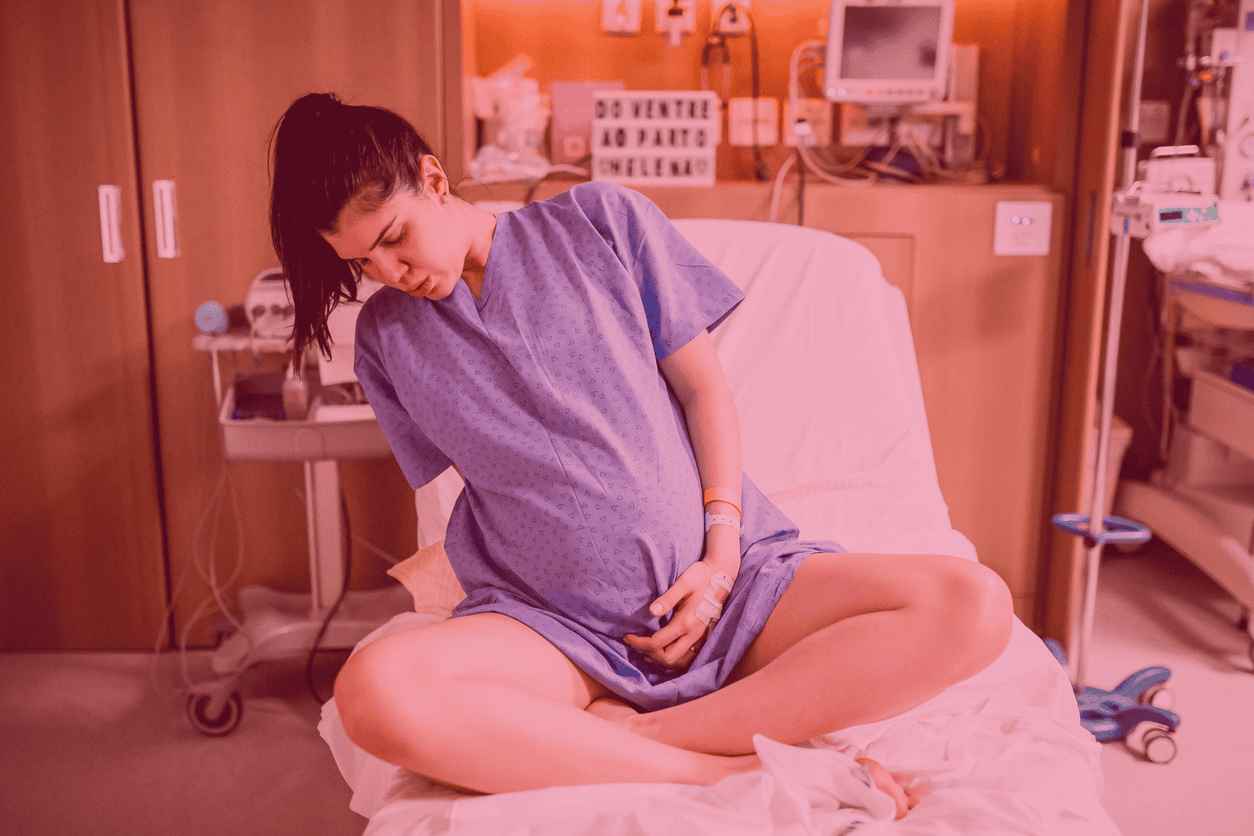
“I went into labour and the home birth team came out to my home and were absolutely great. I was progressing really well and handling contractions great. My home birth midwife did a cervical exam and I was 7cm dilated however, after an hour or so, I started to struggle a lot more with contractions and things started to slow down. Upon another examination, my midwife found I was still 7cm and my son’s head wasn’t best applied to the cervix. She suggested I could go to the hospital to get an epidural so that I could sleep for a while and build up my energy for pushing. I agreed with this idea as I was getting really tired and starting to struggle.
When I arrived at the hospital, the doctor did a cervical exam and said I was actually only 4cm dilated and that my baby was back-to-back. This really shocked me as neither of these were the case when I was at home. He immediately followed this by saying that I need to have a c-section because I won’t progress any further so would be as well going for one now. I was very upset and stressed out by this because the only reason I had transferred to the hospital was for an epidural. Neither my son nor I were in distress, both our heart rates were absolutely fine so there was no medical reason for a c-section.
I explained to the doctor and midwife that I really did not want a c-section and would like to have an epidural to try for the VBAC as had been discussed in all my antenatal obstetrician appointments. Instead of providing me the risks and information and accepting my decision after this, he continued to push for me to have a c-section and said there was absolutely no way I would have a vaginal birth.
Two doctors and two midwives stood around me and watched as I writhed and cried in agony, begging for more pain relief for an hour and a half. The denied me an epidural or any other pain relief and just continuously pushed at me to have a c-section even though there was no medical emergency at the time which would require one. I begged them to let me have an epidural as I did not feel of sound mind at the time in the throes of labour to decide whether to have a c-section and they continuously ignored this request.
I believe the doctor lied about how dilated I was because they wanted me to have a c section from the minute I set foot in the hospital and wanted to throw me off. He implied my home birth midwife was inept and got all her cervical exams wrong because he knew better as a doctor. By the time I was forced into the c section, my final check found me to be 7/8cm dilated and this was less than 2 hours after he said I was only 4cm dilated and would not progress.
“After an hour and a half of being in extreme pain and getting no help, even whilst having panic attacks because I so desperately did not want a c-section again, I said to my husband “Just tell them to do whatever they want, I can’t do this anymore, just let them do what they want” and they immediately started prepping for the c-section and took this distressed statement as consent. I was crying my eyes out and clearly very upset and felt like they did not care.”
This experience massively affected my mental health and my joy during the birth of my child. After having an unnecessary c-section with my first child, I was already very mentally consumed with trying for a different outcome with my second child. I researched extensively during my pregnancy, often not being able to sleep because I was feeling overwhelmed and so determined to do as much research as possible to help me end up with a VBAC. I did exercises every night to try to increase my chances for a vaginal birth. I was a part of multiple support groups for VBACs and home births. I consistently asked for advice on these groups to hear of other people’s positive stories. I met with a doula and paid for courses online.
I am quite a quiet and introverted person and find it very difficult going against the advice of professionals. I worked really hard in every appointment to stand my ground and advocate for a VBAC for myself as I was sure from my research that I could do this safely. I had to do this even when the obstetricians made it very clear they wanted me to have a planned section and consistently scare-mongered me by acting as if the chances were very high of my baby getting brain damage and dying if I tried for a VBAC.
When all of this work ended up with me being coerced and giving in to a c-section at the very last hurdle whilst in labour, I was distraught. I was absolutely heartbroken that I was going to end up with another major abdominal surgery. My dream had always been to have a vaginal birth and be able to just bring my baby straight to my chest and cuddle them for that beautiful golden hour. When my baby was born via section, I was so mentally and physically drained by this point I was completely dissociated. They showed me him over the curtain and I did not feel any joy as I was zoned out and felt miserable when he was then taken to a table behind my head for 5/10 minutes before I could even give him a kiss on the head. I have had to deal with feeling like an absolutely terrible mother for not enjoying the moment he was born.
I really struggled especially in my first few weeks postpartum with this experience. In the times when my baby slept at night, I lay there awake crying and thinking through everything that I should have done differently that would have avoided this outcome. I blamed myself and felt like I hadn’t been strong enough or advocated for myself and had to constantly have family remind me that I did try so hard to stand up for myself to the doctors for a full hour and a half whilst in agony in labour.
“I think that maternity care at the moment needs to be reevaluated so that women are given more voice and autonomy in their own birth. I think there needs to be more training within hospitals and more trust put in mothers and their bodies..”
Interventions, such as induction, are increasingly being offered which usually end up in more interventions even though they are often made out to be the only safe option for the mother and the baby. I think a lot of the training needs to focus on treating labouring women as actual people who are in a very vulnerable place and need help. I believe that a lot of medical staff see women as a number or a statistic and forget that they will have to deal with their birth experience mentally and physically for the rest of their life. ”
Read our report ‘End Coercion in Maternity Care in the UK’You can access our FREE human rights information factsheets here, and find further resources around coercion via the button above.