

In a landmark ruling, the Supreme Court of Victoria has found an Australian hospital guilty of battery and negligence for pressuring a woman to accept a vaginal exam in labour that she did not want. She received damages totalling nearly AUS$300k. So how is this case relevant to the UK?
In a landmark ruling, the Supreme Court of Victoria has found an Australian hospital guilty of battery and negligence for pressuring a woman to accept a vaginal exam in labour that she did not want. She received damages totalling nearly AUS$300k.
This is a fact pattern that will feel familiar to many in the UK, who have seen or experienced vaginal examinations being used as a tool to gatekeep access to labour wards and birth centres alike, to determine midwives’ presence at a homebirth, and/or to determine access to pain relief. In our “End Coercion in Maternity Care in the UK” report, 92% of our survey respondents stated they were not provided with adequate information to make informed decisions, and 81% were told they were “not allowed” to make certain choices about their care.
Whilst the ruling is not binding in the UK, it offers a useful indication of how our courts might approach a similar case, so is a case that all trusts, LMNS, healthcare professionals, birthworkers and women and birthing people should be aware of.
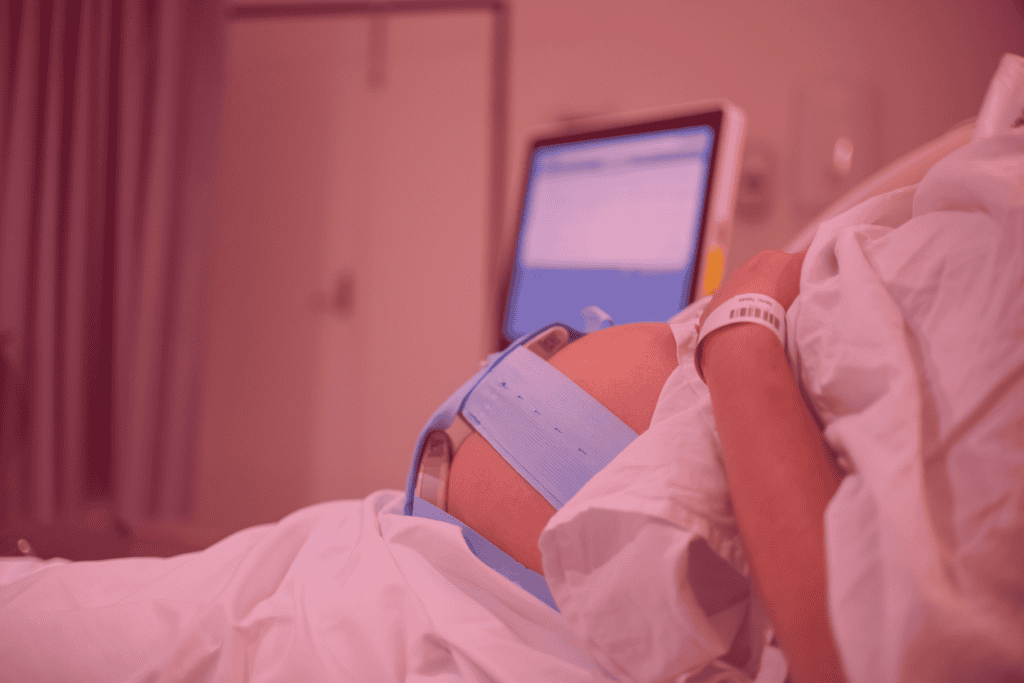
What was the case about: In 2020, Larissa Gawthrop was pregnant with her first child. Throughout her pregnancy, Larissa had been clear that she did not want vaginal examinations (“VEs”) in labour unless there was an urgent medical reason, in which case she asked that this be explained to her so that she could decide whether to accept or decline in the circumstances.
She added a very clear statement to this effect in her birth plan. Larissa had been booked in for pregnancy and birth care with Bendigo Health Hospital’s “continuity of carer” programme (known as MAMTA), and her MAMTA team reassured her during the pregnancy that this was understood, and that they would not even discuss doing one with her unless an urgent medical reason arose.
However, when Larissa came into hospital in labour on 17 November 2020, tragically this was not what happened. A Bendigo Health Hospital midwife (not part of the MAMTA programme), read Larissa’s birth plan, assessed Larissa (including abdominal palpations and making and noting various observations), and then said “we’ll do a VE now”: Larissa asked why, and the midwife responded, “to see if you are in active labour”. This was not an urgent medical reason (all parties agreed there was no concern for mother or baby) so Larissa declined. Larissa asked at this time for her named MAMTA midwife to be called. This was not done.
Over the next two hours, the hospital midwife asked at least six times to perform a VE. On each occasion, Larissa said no. The midwife’s evidence was that she believed that not doing a VE on admission was against hospital protocol (and her evidence was that this had been confirmed to her by her superior – although her superior did not appear in court so was not asked). Interestingly, the court ultimately found that hospital policy in fact did not require a VE to be performed upon admission.
At around 12am, LG asked for pain relief for her back pain. This was not provided. After 1am, Larissa’s husband approached the hospital midwife at the nurses situation. He asked her to confirm his understanding of the situation; namely, that she had no intention of formally admitting Larissa into the hospital, providing her with pain relief (she had at this point asked for a bath and for gas and air, and been denied both) or of calling her MAMTA midwife, until she accepted a VE. The BH midwife confirmed that his understanding was correct. Larissa’s husband relayed this to Larissa and, as a result, Larissa acquiesced to the VE at around 1.10am. Immediately prior to the VE, Larissa was crying and made a last plea to the hospital midwife to call the MAMTA midwife, but the hospital midwife said “we need to do a VE to see if you’re in labour”. Larissa stated “I’ll do it”, whilst crying and shaking.
Following the VE, Larissa was formally admitted, offered pain relief and her MAMTA midwife was called. Subsequently, Larissa did consent to multiple VEs during labour from her MAMTA midwife, as each one was explained to her to be medically important, with a particular reason given. Her baby was born at 6.38am.
Larissa suffered significant psychiatric injury as a result of the non-consensual VE, including significant flashbacks and trauma, which impacted both her professional and personal life extensively.
Larissa sued the hospital on two grounds. First, she argued that the hospital had been negligent in its treatment of her, and second she argued that she had not given free and voluntary consent to the VE in these circumstances, and accordingly that the hospital was guilty under the civil law offence of assault and battery.
The Supreme Court of Victoria upheld her claim on both counts. It found the hospital guilty of negligence, both because it breached the required standard of care as defined in its own “informed consent policy” (whereby Larissa’s “no” ought to have been accepted), and because of its “dual messaging” (whereby the hospital had not properly advised Larissa during the antenatal period, so that she was unaware that there was any risk of the situation arising that ultimately unfolded).
It also held that the non-consensual VE amounted to assault and battery by the hospital as a matter of Australian civil law. This was because Larissa had not given free and voluntary consent to the VE, due to the level of pressure that had been applied to her to accept it (including the withholding of pain relief and her named midwife). The court pointed to the following as relevant issues to consider when analysing the presence of consent: (i) was the person in a position to choose freely, (ii) was there relative weakness/ vulnerability/ imbalance of power, (iii) resignation to one’s fate/mere submission is NOT free and voluntary consent.
This is an Australian law judgment, so is not binding on English and Welsh courts. However, the Australian laws in question are very similar to the English and Welsh equivalent, so it offers a useful indication of how an English/Welsh court might approach a similar case. Furthermore, it is notable that Australian case law (Rogers v Whittaker) amongst other international rulings set the scene for the landmark UK Supreme Court ruling of Montgomery v Lanarkshire (2015). This indicates that this case is likely to be very valuable to the UK courts from a comparative law perspective.
This is a fact pattern that will feel familiar to many in the UK, who have seen or experienced vaginal examinations being used as a tool to gatekeep access to labour wards and birth centres alike, to determine midwives’ presence at a homebirth, and/or to determine access to pain relief. In our “End Coercion in Maternity Care in the UK” report, very similar scenarios to Larissa Gawthrop’s were shared repeatedly:
“The midwives said they didn’t believe I was in labour, so would have to leave, unless I was willing to prove I was in labour with a vaginal examination. I had it in my notes that I didn’t want any vaginal examination due to past sexual trauma. I ‘consented’ (under threat of care withdrawal) to the vaginal examination, the midwives stayed, and I gave birth 6 hours later. I was offered other vaginal examinations during labour, even though my notes said not to offer at all. I did not feel that the midwives were on my side.”
“The midwives attending my homebirth threatened to leave (withdraw care) if I didn’t ‘consent’ to a vaginal exam I did not want.”
“I have frequently witnessed coercion around vaginal examinations. Whether that’s women being told they can’t be admitted without having one or being ‘persuaded’ to have one if the routine four hours has come around but they’ve declined. I’ve informed a senior midwife and the doctor on shift that the woman I was caring for did not want a vaginal examination at that time, only for the doctor to say, ‘I’ll go in and persuade her.’ There was no clinical urgency for this examination.”
- This case should be a wake up call to all trusts, LMNS and healthcare professionals. It is a stark reminder that a maternity service user’s acquiescence to a treatment or procedure under coercion does not equate to free, informed consent, and that there is a real risk of significant legal liability for trusts where coercive environments are enabled via policy, guideline and/or practice.
- For women and birthing people, the case offers a reminder that your voice, and your decision, really matters, and that your right to make choices about your care must be protected, not undermined, by healthcare professionals.
- For all those who care about, and want to support, human rights-respecting practice, it is a useful case to refer to, to demonstrate the practical and legal consequences of maternity services prioritising system convenience over women and birthing people’s rights.
- Case judgement
- Access our FREE resources under our ‘End Coercion’ campaign
- Contact Birthrights’ Advice & Information Service
- ‘Non-Consented Vaginal Examinations: A Hidden Violation?’ – Blog